.png)

Business, banking, media, oil, mining and culture are all centuries-old areas where the richest old-money families have influenced and to an even greater extent, directed. The Rockefellers, Rothschilds, Gettys, Hearsts and Vanderbilts were all names that became synonymous with vast wealth and great power. However, the financial status of the family is not always the same.
Wealth was also scattered among numerous descendants, and wealth was also dedicated to charities, museums and foundations. These great fortunes were also impacted by business fluctuations, taxes, spending, and inheritance. Nowadays, many of the heirs of the great wealth of their ancestors are still very rich, but not so many in control of such vast wealth. Their tales illustrate the challenge of saving for multiple generations.
Old-money families in the 21st century
Vanderbilts, Gettys, and Rothchilds evoke images of hyper-richness, but how wealthy and powerful are these fabled old money families really in today's world?
The Hearsts: then
The media baron and subject of Orson Welles' 'Citizen Kane' owned a staggering 28 high-level newspapers and 18 magazines at the height of his career. He inherited the money from his wealthy father; George Hearst, who was a mining tycoon and politician and was believed to be one of the first great American tycoons. He may have famously faced accusations of "spending money like water," but when Hearst died in 1951, the valuation was $2.4 billion (1.9 bn) in modern money.
Read More: Lifestyle Changes In Travel And Tourism
The Rockefellers: then
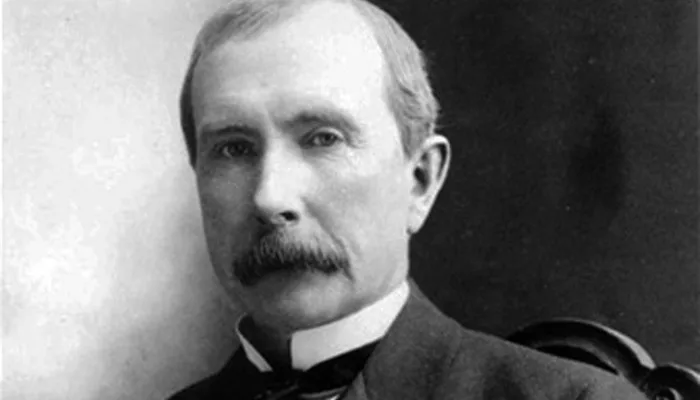
Ohio entrepreneurs John D. Rockefeller (shown), left, and his brother, William Rockefeller Jr. founded Standard Oil in 1870. The siblings rose to power, and by the 1880s, they were among the most powerful and wealthy individuals in the U.S. In 1916, people recognized John D. Rockefeller as the richest man in America when he became the nation's first billionaire.
The Rockefellers: then
“But some academics go even higher and estimate Mr. Rockefeller, who passed away in 1937, to be worth $400bn (£296bn) at today’s prices. And in 2006, the richest person ever born, less than a century after the wealthiest individual in modern history a family’s influential business baron—had his family valued at $305bn.” The Rockefeller patriarch generously contributed almost all of his substantial fortune to various charitable causes.
The Rothschilds: then
Mayer Amschel Rothschild, a prominent figure of the Rothschild bank dynasty and the father of Europe’s first international banker, Meyer Amschel Rothschild, built his vast financial empire starting from the Jewish ghetto of Frankfurt between the years 1744 and 1812.
The Rothschilds: then
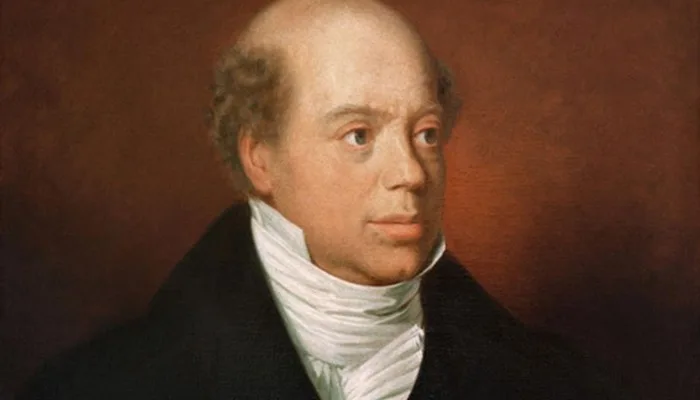
When the patriarch died, he left all the vast family fortune to his five sons, who then established family branches in France, Britain, Italy, and Austria. For much of the 19th century, the Rothschilds held the title of the wealthiest family in the world by a wide margin. Here is a picture of Nathan Mayer Rothschild, who founded the English branch of the family.
The Rothschilds: now
The family has passed down the fortune through the various descendants of Mayer Amschel Rothschild over the years, paying for such diverse items as fine chateaux, mining and energy businesses, as well as enormous philanthropic efforts.
Anti-Semitic conspiracy theorists have often singled out members who wildly overstate the wealth and influence of the Rothschild family - they're not even one of the world's richest families on average. 1. Benjamin de Rothschild. Benjamin de Rothschild - the wealthiest of Rothschild's French family members (pictured above) - died from a heart attack suddenly in Jan 2021, while he had a net worth of an incredible $1.4 bn (1 bn) according to Forbes, therefore making him the wealthiest of the family on the Earth.
The Gettys: then
When 83-year-old businessman J. Paul Getty passed away at his English mansion in 1976, he left behind an estate worth approximately $2.7 billion today (2bn). This man could possibly be the stingiest in the history of the universe, but one thing is certain: Getty did not engage in bargain hunting when it came to fine art.
When he died, his personal collection included a Rembrandt, a Tintoretto, a Monet, and more, all of which are now displayed for the public to admire in the Getty Museum in California. His family ultimately ended up with less than five million dollars of his cash in total; however, a massive portion of his wealth went to establish the J. Paul Getty Trust, which currently stands as the most valuable art organization on Earth.
The Vanderbilts: then
The vast majority of Vanderbilt mansions no longer belong to families. However, the greatest of all Vanderbilt mansions—in the north of Carolina and known as Biltmore remains family owned, with the great-great-great-grandchildren of William Henry Vanderbilt, Bill Cecil and his sister Dini Pickering, serving as its current owners.
Trust funds and privileged connections have enabled several Vanderbilts to maintain a wealth that far surpasses that of many people.
The Vanderbilts: now
But Cooper, who is pictured above, was already incredibly wealthy on his own accord. He is a respected, award-winning television news anchor making a staggering, albeit in excess of $18m (13.3m) each year from his role on CNN alone. Many sources say he is worth a whopping $60m (44m) or more. As for Gloria’s apartment in New York, her eldest son Leopold Stokowski instead owns it.
The rest of the wealthier and more successful of the late Cornelius Vanderbilt’s descendants include the 12th Duke of Marlborough ($240m /178m), Custodian of Blenheim Palace and descendant through great-grandmother, Consuelo Vanderbilt. As far as Hollywood comes into it; there’s scribe, James Vanderbilt ($20m /15m) and actor Tim Olyphant ($20m /15m), among others.
FAQs
1. Who were the richest old-money families?
The Rockefellers, Rothschilds, Gettys, Hearsts and Vanderbilts are among the best-known historic wealthy families.
2. Is the Rockefeller family still wealthy?
Yes. Many Rockefeller descendants remain financially successful, while the family's historical fortune was also used extensively for philanthropy and charitable foundations.
3. Are the Rothschilds still one of the world's richest families?
Rothschild descendants remain involved in finance, investment and other businesses, but claims that the family controls an enormous secret global fortune are generally unsupported.
4. What happened to the Vanderbilt fortune?
The Vanderbilt fortune was divided among many descendants and reduced through inheritance, spending and changing economic conditions. Some family properties and trusts remain.
5. Whih old-money family gave away a large fortune?
Several of these families became major philanthropists. John D. Rockefeller and J. Paul Getty are especially notable for directing substantial wealth toward charitable, educational and cultural causes.